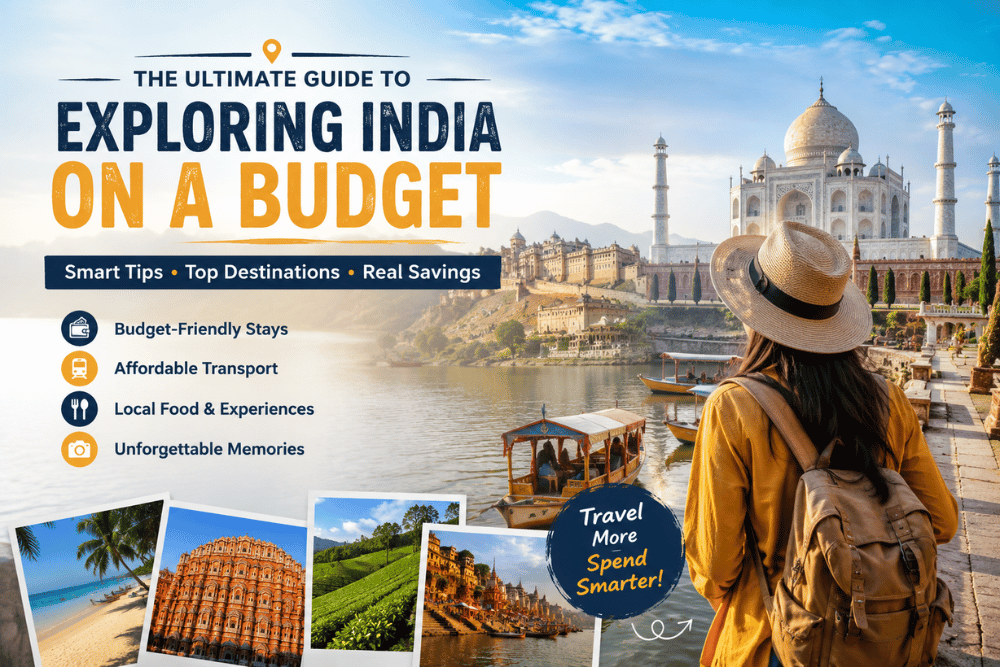
India is one of those rare destinations where a memorable holiday does not have to depend on an extravagant budget. From historic cities and colourful markets to peaceful beaches, mountain landscapes, spiritual centres and regional food experiences, India offers travellers many ways to explore without turning every part of the trip into a major expense. The real secret to budget travel in India is not simply spending less; it is knowing where your money matters most and planning your journey so that you get genuine value from every part of the experience. With the right destination, accommodation, transport and itinerary, you can enjoy a comfortable and meaningful trip while keeping unnecessary costs under control.
Travelling on a budget also does not mean that you have to compromise on the quality of your holiday. You can choose a comfortable stay instead of an expensive luxury property, enjoy local restaurants rather than eating every meal at premium establishments, use suitable public or shared transportation and focus on experiences that allow you to understand the destination. Cities such as Jaipur and Agra can offer rich heritage experiences, Varanasi provides a deep cultural atmosphere, Goa and Kerala can deliver relaxing coastal and nature-focused holidays, while destinations across Rajasthan and other regions offer opportunities to explore India's history and local traditions. The key is to build an itinerary around your interests instead of trying to see everything in one trip.
At Vacationtales , we understand that travellers want their holiday to feel enjoyable, organised and worthwhile, especially when they are planning around a specific budget. A well-designed holiday is not only about finding the lowest possible price. It is about understanding what is included, selecting suitable accommodation, choosing practical travel arrangements and making sure your itinerary matches your available time and preferences. This guide explains how to travel India on a budget, where you can save money, how to avoid unnecessary travel expenses and how thoughtful planning can help you enjoy more without making your holiday feel restrictive.
What Does Budget Travel in India Really Mean?
Budget travel does not have one fixed definition because every traveller has different expectations. For one person, it may mean staying in simple accommodation and using public transport, while another traveller may prefer a comfortable hotel but save money by planning sightseeing and transportation carefully. A family may have different priorities from a solo traveller, and a couple planning a romantic getaway may choose to spend more on accommodation while reducing costs elsewhere.
A better approach is to think about value rather than simply low prices. The cheapest room is not always the best choice if it is far away from the places you want to visit and requires expensive local transportation every day. Similarly, a very cheap route may not be worthwhile if it takes so long that you lose valuable holiday time. A smart budget considers the complete experience, including accommodation, transport, food, sightseeing, activities and the convenience of your itinerary.
Before booking anything, decide what you are willing to spend more on and where you are comfortable saving. If comfortable accommodation matters most, choose a convenient stay and save through food and local transportation. If sightseeing and experiences are your priority, you may prefer simpler accommodation and put more of your budget towards activities. This approach makes affordable travel in India feel much more personal and practical.
Choose Your Destination Carefully
Choosing the right destination is one of the simplest ways to manage your India travel budget while still enjoying a rewarding holiday. India offers an enormous variety of destinations, but trying to cover places that are far apart can increase transportation costs, reduce sightseeing time and make your trip feel rushed. Instead, choose destinations based on your interests, available time and travel style. For a heritage-focused journey, Delhi, Agra and Jaipur work naturally together through the popular Golden Triangle route, giving travellers the opportunity to experience historic monuments, royal architecture, colourful markets, local food and India's cultural heritage without constantly travelling between distant regions.
If you prefer spiritual and cultural experiences, Varanasi offers a very different kind of journey. Its ghats, temples, historic lanes, traditional markets, local food and cultural atmosphere provide plenty to discover without making expensive attractions the centre of your itinerary. The official Incredible India tourism portal highlights Varanasi's riverfront, old-city character and nearby Sarnath as important parts of the destination. Incredible India - Varanasi For travellers who prefer nature and relaxation, Kerala offers backwaters, greenery and scenic landscapes, while Goa is well suited to beaches, leisure and coastal experiences. Travellers interested in forts, palaces and traditional culture can explore Rajasthan, while those seeking mountain scenery and adventure may consider Ladakh.
The most important part of planning budget travel in India is choosing a destination that fits your priorities rather than simply selecting the cheapest option. Consider how much time you have, how far you need to travel, what type of accommodation you prefer and which experiences you are willing to spend more on. A well-planned route with fewer destinations can often provide better value than a packed itinerary because you spend less time and money moving between places and more time actually enjoying your holiday. Choose wisely, plan realistically and build your trip around the experiences that matter most to you.
Yes. A short list can make this section easier to scan without making the article look too fragmented.
Plan Your Route Before You Book
A smart route can make your budget trip to India more comfortable, affordable and enjoyable. Instead of booking hotels and transportation one by one, first look at your complete journey and decide how the destinations fit together. A low-priced hotel may not provide real value if it is far from the main attractions and requires frequent local transport. Likewise, adding too many distant destinations to a short holiday can increase transportation costs and leave you with less time to actually enjoy each place. Planning the route first helps you understand where your money and holiday time are going.
Before booking, keep these simple points in mind:
- Choose destinations that connect naturally to reduce unnecessary travel.
- Allow enough time in each place instead of constantly changing hotels.
- Compare total travel costs, not just the ticket price.
- Consider travel time because a cheaper journey may take much longer.
- Check accommodation location so you do not spend too much on daily local transport.
For example, travellers interested in history can combine Delhi, Agra and Jaipur into a practical heritage itinerary rather than trying to cover several distant regions in one short trip. This gives you more time for sightseeing, local food, markets and cultural experiences while reducing unnecessary movement. A slower itinerary can often provide better value because you spend less time travelling and more time experiencing the destination.
For longer journeys, Indian Railways can be a useful option to consider. Its official passenger services allow travellers to check train information and plan suitable rail journeys. Indian Railways Depending on your route, trains, buses, flights or local transportation may each make sense for different parts of your trip. The best choice is not always the cheapest ticket; consider the overall cost, travel duration, convenience, luggage and how much valuable holiday time you will use. A well-planned route should help you save money without making your India holiday feel rushed.
Save Money on Accommodation Without Sacrificing Comfort
Accommodation is often one of the biggest parts of a holiday budget, but choosing the cheapest room available is not always the smartest way to save money. A better approach is to find a stay that offers the right balance of price, comfort, location and useful inclusions. If you plan to spend most of your day exploring, there may be little reason to pay extra for facilities you are unlikely to use. A clean, comfortable and conveniently located hotel can often provide better overall value than a more expensive property simply because it has more features.
When comparing hotels, think about how the property will affect the rest of your trip. A convenient location near your main attractions, restaurants or transport options can reduce daily travel expenses and give you more time for sightseeing. For families, practical room arrangements and essential facilities may be more important than premium extras. Couples may prefer a comfortable property in a quieter area, while solo travellers may value easy access to public transport and central locations. Your accommodation should support your itinerary rather than create additional travel costs.
Before making a booking, compare more than the displayed room price. Check these important details:
- Location: How close is the property to the places you plan to visit?
- Inclusions: Does the rate include breakfast, transfers or other useful services?
- Room type: Does it suit the number of people travelling?
- Cancellation terms: Can you change or cancel the booking if your plans change?
- Transport access: Will reaching sightseeing areas require frequent taxis or other paid transport?
- Overall value: Does the accommodation provide the comfort and convenience you actually need?
For budget travel in India, the goal is to find accommodation that works with your entire itinerary rather than focusing only on the lowest room rate. Sometimes paying slightly more for a well-located and comfortable stay can reduce other expenses and make the whole journey easier. Compare your options carefully, understand what is included and choose a property that gives you genuine value for your travel budget.
Eat Local and Experience More
Food is an important part of the Indian travel experience, and it can also be one of the easiest ways to enjoy your destination without putting unnecessary pressure on your budget. Every region has its own flavours, ingredients, cooking styles and food traditions, so eating locally allows you to discover more about a place while keeping your meals practical. From regional breakfasts and traditional vegetarian dishes to local snacks, sweets and speciality meals, exploring the food of a destination can become an experience in itself rather than simply another travel expense. In cities such as Varanasi, local cuisine forms an important part of the wider cultural experience, with the official Incredible India tourism portal highlighting food alongside the city's heritage and spiritual attractions. Incredible India - Varanasi Food & Travel Experiences
You do not need to avoid restaurants completely or choose the cheapest meal available. Instead, look for places that offer good local food at a price that fits your travel plan. Well-regarded local restaurants, traditional eateries and established food spots can often give you a better connection with regional cuisine than relying only on familiar international options. At the same time, saving money should never mean ignoring basic food safety. Choose places that appear clean and well maintained, pay attention to how food is handled and select meals that suit your personal preferences. A sensible approach allows you to enjoy local flavours while keeping both your comfort and budget travel in India goals in mind.
Focus on Experiences Instead of Expensive Attractions
A memorable holiday is not determined by the number of paid attractions you can fit into your itinerary. Some of the most rewarding travel experiences can come from walking through historic neighbourhoods, exploring local markets, enjoying scenic landscapes, discovering traditional architecture, trying regional food or simply spending time observing everyday life. These experiences can help you understand the character of a destination while giving you the freedom to travel at a more relaxed pace. In places such as Varanasi, the historic lanes, ghats, cultural traditions, crafts and food are important parts of what makes the destination distinctive, showing that meaningful travel does not always require a long list of expensive activities.
When planning your itinerary, choose a few experiences that genuinely interest you and give yourself enough time to enjoy them. You can then decide where paid attractions or special activities are worth adding to your trip rather than spending money simply to keep every part of the day occupied. This approach also creates room for unexpected discoveries, whether that means finding a local market, enjoying a beautiful viewpoint, trying an unfamiliar dish or taking photographs in a place you had not originally planned to visit. For travellers following an India travel guide on a budget, the goal should be to spend intentionally on experiences that add real value while allowing the destination itself to provide many of the memorable moments for free or at a modest cost.
Travel During the Right Season
The timing of your India trip can have a noticeable effect on both your experience and your overall budget. However, there is no single travel period that is automatically the cheapest for every destination. Accommodation demand, local events, festivals, school holidays, weather conditions and destination popularity can all influence what travellers pay. Instead of choosing dates simply because they appear inexpensive, research the destination you want to visit and consider whether the conditions will allow you to enjoy the experiences you have planned. Travelling outside the busiest periods may provide more accommodation choices and potentially better value, but the right timing should always balance cost with weather, comfort and the activities you want to enjoy.
Your destination should guide your seasonal planning. A beach holiday in Goa, a heritage journey through Rajasthan, a nature-focused trip to Kerala and a high-altitude adventure in Ladakh can all require very different preparation. Before booking, check the expected local conditions, transportation options and availability of the experiences you want. If your dates are flexible, compare different travel periods rather than automatically choosing the most popular time. A little research before booking can help you avoid unsuitable weather, unnecessary expenses and changes to your itinerary later.
Avoid Hidden Travel Costs
Keeping a holiday within budget requires more than finding affordable flights or hotels. Small expenses can gradually increase your total spending, particularly when they are not included in your original plan. Local transportation, baggage charges, meals between activities, attraction fees, parking, convenience purchases and last-minute bookings can all affect the final cost of your trip. Creating a realistic budget before travelling gives you a clearer picture of what you are likely to spend and makes it easier to decide where you can save and where spending a little more is worthwhile.
When preparing your budget, consider these main areas:
- Accommodation and any additional hotel charges
- Transportation between and within destinations
- Food and drinks throughout the trip
- Sightseeing and activities
- Local travel and transfers
- Shopping and personal expenses
- Emergency or unexpected costs
Also check exactly what is included when comparing hotels, activities or holiday packages. Two options may appear similar at first glance but provide very different value once transfers, meals, sightseeing or other inclusions are considered. Looking at the complete cost rather than only the advertised starting price can help you make a more informed decision and avoid surprises during your holiday.
Consider a Curated Holiday Package
Planning an independent trip gives you plenty of flexibility, but organising every part of the journey separately can take considerable time. You may need to compare hotels, transportation, sightseeing, transfers and activities while also making sure that the timings work together. For travellers who prefer a more organised approach, a curated holiday package can bring several important elements of the journey together and make the planning process easier.
The value of a package should not be judged simply by whether it is cheaper than booking everything independently. A well-structured package can also provide convenience by bringing accommodation, sightseeing, transfers and selected experiences into one itinerary, making it easier to understand what your holiday includes. It can be particularly useful for families, couples and travellers planning a multi-day trip who want to spend less time coordinating individual bookings and more time focusing on the destination.
At Vacationtales , the focus is on curated domestic and international holiday packages designed around different travel styles, preferences and budgets. The platform brings together stays, sightseeing, transfers and experiences with an emphasis on convenient planning and transparent inclusions. If you want to keep your India travel budget under control without spending hours organising every detail yourself, comparing a suitable Vacationtales package with independent travel options can help you choose the approach that best fits your holiday.
Build a Budget That Matches Your Travel Style
There is no reason to copy another traveller's budget because your priorities may be completely different. A solo traveller might spend more on experiences and less on accommodation, while a family may need to prioritise comfortable rooms and convenient transport. A couple might choose a special stay while saving on other parts of the itinerary.
Start with your total available budget and divide it into broad categories: accommodation, transportation, food, sightseeing and activities, shopping and an emergency or contingency amount. You can then decide which categories deserve more attention.
This method gives you flexibility. If you find an excellent accommodation option at a good value, you may have more room for experiences. If transportation costs are higher than expected, you can reduce spending elsewhere without losing control of the entire trip.
Budget Travel Does Not Mean a Cheap Experience
The best India budget travel experience is not about cutting every possible expense or choosing the cheapest option at every stage of your journey. It is about spending your money with purpose and making choices that give you genuine value. You can stay in a clean and comfortable hotel without choosing the most expensive property, enjoy authentic local food without eating at premium restaurants for every meal, and use practical transportation while still discovering India's landscapes, culture and heritage. The idea is to create a holiday that feels enjoyable and comfortable within your financial limits rather than one where saving money becomes the main focus.
A good budget trip also gives you enough time to enjoy the destinations you have chosen. Rushing through several cities can sometimes increase costs because travellers may need last-minute bookings, expensive transfers or activities simply to make the most of limited time. A slower and better-planned itinerary gives you more control over your spending while allowing you to experience local markets, food, architecture, nature and everyday life at a comfortable pace. When you know which experiences matter most, you can spend more confidently on those and avoid paying for things that do not add real value to your holiday.
Practical Checklist for Planning an India Budget Trip
A successful budget trip to India starts with understanding the complete cost of your journey rather than looking at individual bookings in isolation. A low hotel price does not always mean a cheaper holiday if the property is far from the places you want to visit. Likewise, choosing the cheapest transport option may not provide good value if it takes much longer or requires additional connections. Before confirming your trip, think about how your destination, accommodation, transportation, food and sightseeing will work together. This simple approach can help you avoid unnecessary spending while keeping enough flexibility to enjoy the destination.
Use this practical checklist before confirming your India holiday:
- Choose a practical route: Select destinations that connect naturally so you can reduce unnecessary travel time and transportation costs.
- Set your complete budget: Allow for accommodation, transport, food, sightseeing, shopping and unexpected expenses instead of budgeting only for your hotel.
- Choose accommodation for value: Compare location, comfort, facilities and inclusions rather than automatically choosing the cheapest room.
- Compare transportation properly: Look at the total cost, travel duration, connections, luggage and convenience before booking.
- Check booking inclusions: Make sure you understand what is included in your hotel, transport or holiday package and what will cost extra.
- Keep a contingency amount: Reserve part of your budget for unexpected expenses, changes or last-minute travel needs.
- Avoid an overloaded itinerary: Fewer destinations with enough time to enjoy them can provide better value than constantly moving between places.
- Keep some money for experiences: Leave room in your budget for local food, markets, activities and experiences you discover during the journey.
A good India travel guide on a budget should not encourage you to cut costs everywhere. The better approach is to identify where spending adds genuine value and where you can make practical savings without affecting your comfort. You might choose a well-located mid-range hotel instead of an expensive property, use suitable public or shared transportation for some journeys, enjoy local restaurants and focus your sightseeing budget on experiences that genuinely interest you. This creates a holiday that feels considered rather than restricted.
It is also worth reviewing your itinerary once before making the final bookings. Check whether the destinations are realistic for the amount of time available, whether your accommodation locations make sense and whether transportation connections leave enough time for rest and sightseeing. Keep important booking confirmations, tickets and travel information organised so you are not searching for details during the trip. Most importantly, leave some flexibility. A budget should give you control over your spending without taking away the freedom to enjoy an unexpected meal, local experience, market visit or beautiful moment along the way.
The goal of budget travel in India is not simply to spend the least amount possible. It is to spend intelligently, avoid unnecessary costs and put your money towards the experiences that make your holiday memorable. With a realistic budget, a practical route, suitable accommodation and enough time to enjoy each destination, you can explore India comfortably while keeping your overall spending under control.
Closing Thoughts
Exploring India on a budget can be one of the most rewarding ways to experience the country because it encourages you to travel thoughtfully and focus on what genuinely matters. You do not need an extravagant itinerary to discover India's history, culture, food, landscapes and local character. With the right destination, practical transportation, comfortable accommodation, sensible food choices and a realistic schedule, you can create a holiday that feels rich in experiences without unnecessary spending. The goal is not to make every part of the trip as cheap as possible; it is to make every important part of the trip worthwhile.
India offers countless possibilities for travellers with different budgets and interests. You can explore the royal heritage of Jaipur, discover the timeless history of Agra, experience the spiritual atmosphere of Varanasi, relax along the beaches of Goa, enjoy the natural beauty of Kerala or explore other destinations that match your travel style. Whether you are travelling alone, with a partner, with friends or with family, the best itinerary is the one that fits your available time, comfort level and priorities rather than simply following the most popular route.
At Vacationtales , we believe better travel begins with simpler planning and clear choices. Whether you prefer to arrange your journey independently or explore a curated holiday package, your goal should remain the same: choose wisely, travel comfortably and make the most of every destination. With curated domestic and international holiday packages designed around different preferences and budgets, Vacationtales can help bring together stays, experiences and travel arrangements in a more convenient way. Your budget should shape your journey, not limit it. Plan better, travel smarter and make your next India holiday one worth remembering.